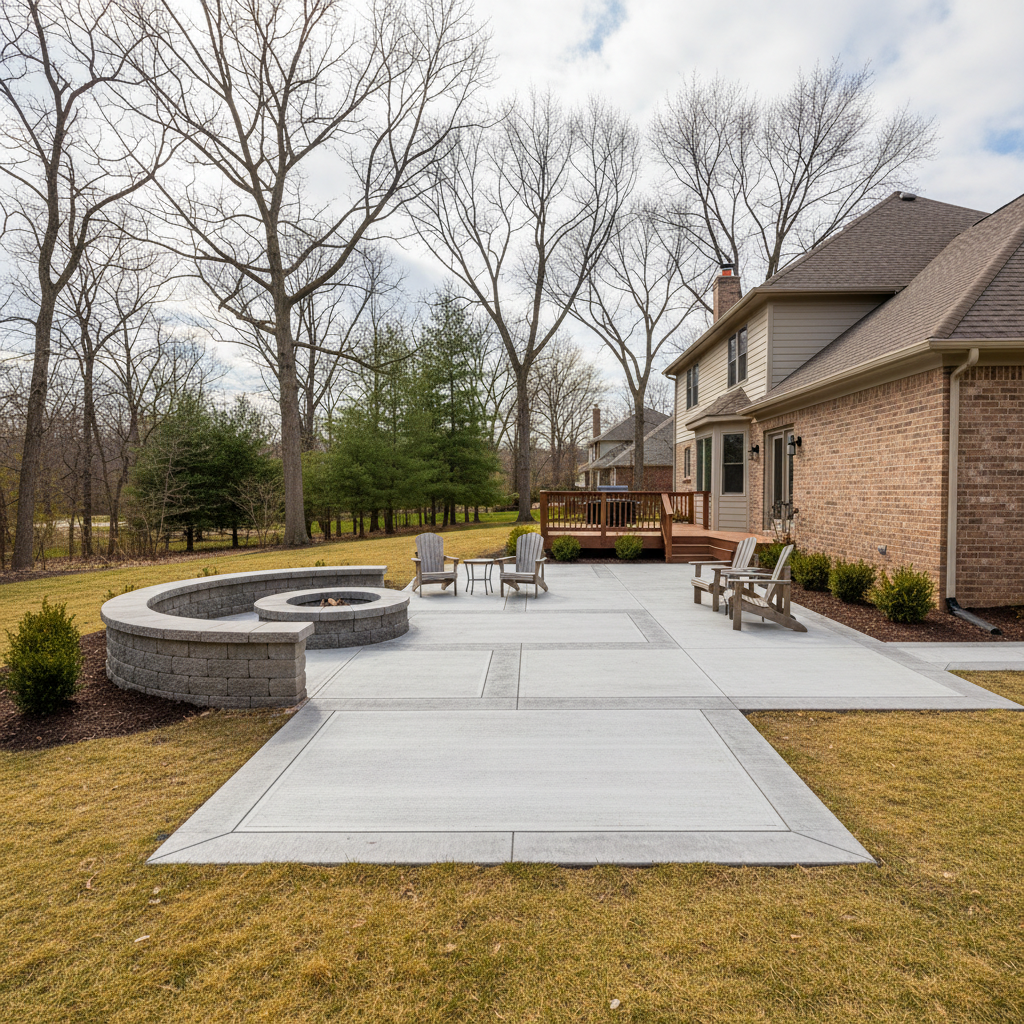
When's the best time to pour a new concrete patio here in Arlington Heights? That's a question I get asked a lot, and for good reason, too. You want your investment to last, right? Timing plays a huge role in that. It's not just about when it's convenient for you; it's about giving the concrete the best shot at curing properly and performing for years to come.
Understanding Arlington Heights Weather & Concrete
Our climate in Chicagoland, especially right here in Arlington Heights, is pretty brutal on concrete. We get those wild temperature swings, from scorching summers to freezing winters, plus all that freeze-thaw cycling. That's the real enemy of concrete, believe me. Water seeps into tiny pores, freezes, expands, and then thaws, creating stress and, eventually, cracks. So, whether we're pouring new concrete or just maintaining what you've already got, we're always fighting against Mother Nature.
For new pours, the sweet spot is usually spring or fall. You're looking for consistent temperatures, ideally somewhere between 40 and 70 degrees Fahrenheit, and not too much rain. In spring, once the ground thaws and we're past those consistent overnight freezes, that's a good window. You've got moderate temps and usually some decent moisture in the air, which really helps with curing. Summer can work, but you've got to be careful with extreme heat. If it's too hot, the water evaporates too quickly, and the concrete can dry out before it's properly cured. That leads to a weaker slab and more cracking. We can handle that with the right techniques, sure, but it's an added challenge.
Fall is often my favorite time, honestly. The ground's still warm from summer, but the air temperatures are cooling down. You get those nice, long curing times without the rush of summer heat. Just make sure you're not pushing it too close to winter's first hard freeze. If we pour concrete and it freezes solid before it's gained enough strength, well, you're going to have problems.
Scheduling Your Patio Project
So, what does all this mean for scheduling? Don't wait until August to call me for a patio you want done in September. Good contractors, like us at Oasis Concrete, book up fast, especially in those prime spring and fall windows. If you're thinking about a new patio for next year, start planning this fall or over the winter. Get on the schedule early. That way, we can pick the best time for your project, not just the only time available.
We always keep an eye on the forecast. If we've got a project scheduled and a cold snap or a heatwave is coming, we might need to adjust. It's all about protecting your investment and making sure the concrete gets installed under the best possible conditions. Sometimes that means a slight delay, but it's always for the best outcome.
Protecting Your Concrete Patio Year-Round
Once your patio is in, the work isn't over. You've got to protect it. Here's what I tell all my Arlington Heights clients:
- Seal it: This is probably the most important thing you can do. A good quality sealer acts like a raincoat for your concrete. It repels water, oil, and other stains, and significantly reduces the impact of that freeze-thaw cycle we talked about. You should plan to reseal every 2-3 years, depending on the sealer type and how much abuse your patio takes.
- Clean it regularly: Don't let dirt, leaves, or other debris sit on your patio for long periods. They can trap moisture and promote staining or even moss growth. A simple sweep and occasional rinse with a garden hose is usually enough. For tougher spots, a mild detergent and a brush will do the trick.
- Watch the salt: If you're using de-icing salts on your walkways or driveway in winter, be careful not to track them onto your patio. Many de-icers, especially those containing ammonium sulfate or ammonium nitrate, can be very damaging to concrete. Stick to sand or pet-safe alternatives if you need traction.
- Snow removal: When shoveling snow, use a plastic shovel instead of a metal one. Metal shovels can scratch the surface of your concrete, especially if it's decorative.
- Avoid heavy impacts: Try not to drop heavy, sharp objects on your patio. While concrete is strong, it's not indestructible, and concentrated impacts can cause chips or cracks.
Taking these steps will go a long way in preserving the look and longevity of your concrete patio. It's an investment in your home, and with a little care, it'll serve you well for decades. If you ever have questions about your concrete, or you're ready to talk about a new project, you know who to call.