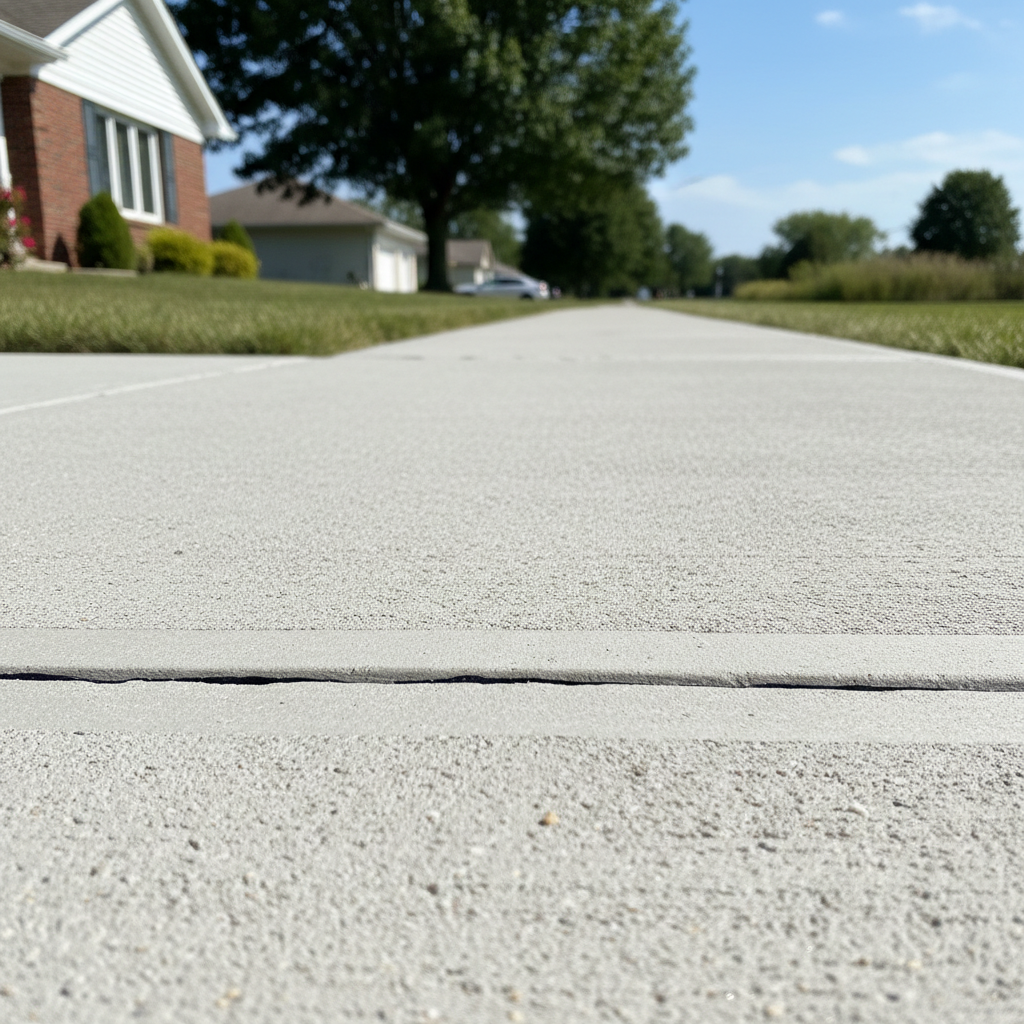
Alright, let us talk about sidewalks. You walk on them every day, your kids ride bikes on them, and sometimes, they just start looking a little rough. Here in Arlington Heights, Illinois, we see a lot of the same questions pop up about concrete sidewalks, and I get it. You want to know what is going on, how to fix it, and what is worth your hard-earned money. So, let us get into some of those common questions homeowners ask me about concrete sidewalks in Arlington Heights.
Why is my concrete sidewalk cracking and lifting in Arlington Heights?
This is probably the most common question I get about concrete sidewalks, and honestly, it is a mix of a few things, especially around here in Arlington Heights. First off, concrete naturally shrinks a bit as it dries and cures. That is just how it is. Even a perfectly poured concrete slab will eventually show some hairline cracks. But the bigger cracks and lifting in your Arlington Heights sidewalk? That is usually about what is happening underneath the concrete.
Our Illinois climate is a big reason for concrete sidewalk problems. Those brutal freeze-thaw cycles we get every winter in Arlington Heights? Water seeps into tiny pores in the concrete, freezes, expands, and then thaws. This constant movement really stresses the concrete and also the ground beneath it, leading to cracks, flaking (we call that spalling), and uneven sections of your concrete sidewalk. It is like a slow-motion earthquake for your Arlington Heights sidewalk.
Then there is the soil here in Arlington Heights. Arlington Heights has its share of clay-rich soils, and these can shrink and swell a lot with changes in moisture. If the soil underneath your concrete sidewalk is not compacted properly during installation, or if water erodes it away, you end up with voids. When there is nothing supporting the concrete, it is going to settle, crack, or lift. I have seen plenty of concrete sidewalks near downtown Arlington Heights, especially those older, tree-lined streets, where tree roots are pushing up sections too.
What is the difference between an expansion joint and a control joint, and why do I need them for my Arlington Heights concrete?
This is a good question, and folks often mix them up. Think of it this way: concrete is not elastic; it likes to move. It expands when it is hot and contracts when it is cold. Without somewhere to go, it will crack wherever it wants, and usually not in a pretty, straight line on your Arlington Heights concrete sidewalk.
- Control joints (or contraction joints) are those grooves you see cut into the concrete at regular intervals. We put them there on purpose. They are basically planned, weakened lines that encourage the concrete to crack along them as it shrinks and cures. It is about controlling where the cracks happen on your Arlington Heights concrete, not preventing them entirely.
- Expansion joints (or isolation joints) are different. These are wider gaps, usually filled with a flexible material like cork or foam, that completely separate one concrete slab from another, or a slab from a building or foundation. Their job is to give the concrete room to expand and contract with temperature changes without pushing against other structures or buckling. You will see these where your Arlington Heights sidewalk meets your driveway, or where it meets your house. If you do not have them, or if they are not maintained, you can end up with buckled concrete sidewalks and serious trip hazards for your Arlington Heights home.
Can I just repair my concrete sidewalk in Arlington Heights, or do I need to replace the whole thing?
That is the million-dollar question for many Arlington Heights homeowners, right? For minor issues like small cracks or surface damage on your concrete sidewalk, repair can definitely be a cost-effective solution. We are talking about crack filling, patching, or even resurfacing. If you have uneven sections, especially those caused by soil settlement, concrete lifting (like mudjacking or polyurethane injection) can often fix the problem without tearing out the whole concrete slab. It is faster, cleaner, and usually much cheaper than a full concrete sidewalk replacement for your Arlington Heights property.
However, if your concrete sidewalk in Arlington Heights has extensive damage – we are talking large, deep cracks, significant crumbling, or multiple sections that are severely uneven and beyond leveling – then replacement might be the better, longer-term solution. When concrete repairs stop holding up and new problems keep popping up, it is a sign the concrete has reached the end of its useful life. We at Oasis Concrete always assess the concrete damage thoroughly to give you an honest recommendation for your Arlington Heights concrete sidewalk. Sometimes, a concrete repair is just a band-aid, and you need a fresh start with a new concrete sidewalk.
How long should a concrete sidewalk last in Arlington Heights, Illinois?
With our crazy Midwest weather here in Arlington Heights, this is a fair question. Generally, a properly installed concrete sidewalk should last you a good 25 to 35 years. Some sources even say up to 50 years with excellent care. But that is with proper concrete installation, good drainage, and some regular maintenance. Things like heavy foot traffic, harsh winters in Arlington Heights, and those pesky tree roots can shorten that concrete sidewalk lifespan. If you are seeing frequent new cracks, a dull appearance even after cleaning, or large-scale damage to your concrete sidewalk, it might be time to start thinking about concrete replacement, regardless of its age.
Do I need to seal my concrete sidewalk in Arlington Heights, and how often?
Absolutely, you should seal your concrete sidewalk, especially here in Arlington Heights, Illinois. Think of it as sunscreen and a raincoat for your concrete. Concrete is porous, so it can absorb moisture. Sealing creates a protective barrier that helps prevent water from soaking in. This is important for preventing freeze-thaw damage, which is a major cause of cracks and spalling in our Arlington Heights climate and for your concrete sidewalks.
Beyond that, a good concrete sealant protects against stains from oil, grime, and even those de-icing salts we use in winter, which can really erode concrete surfaces. It also helps reduce surface dusting and can even enhance the look of your concrete sidewalk. Most pros recommend sealing your concrete every 2-3 years. If water stops beading up on the surface of your concrete sidewalk, it is a good sign it is time for a fresh coat of sealant.
When is the best time of year to pour new concrete for a sidewalk in Arlington Heights?
Timing is everything when it comes to concrete, especially here in Illinois. You want to hit that sweet spot where the weather is not too hot, not too cold, and not too wet for your concrete sidewalk project. The ideal temperature for concrete to cure properly is generally between 50°F and 85°F. If it is too cold (below 40°F), the concrete curing process slows way down, and freezing water can damage the fresh concrete. If it is too hot (above 90°F), the concrete can set too fast, leading to rapid moisture loss and surface cracking on your new concrete sidewalk.
So, what does that mean for us in Arlington Heights? Late spring (think May) and early fall (September and October) are usually your best bets for pouring concrete sidewalks. The temperatures are moderate, humidity is lower, and you are more likely to get a few dry days in a row, which is important for proper concrete curing. June can be good too, but we start getting into hotter temperatures then. If you are planning a concrete sidewalk project in Arlington Heights, it is always smart to talk to your contractor early. Good ones, like us at Oasis Concrete, book up fast during those prime seasons for concrete work.
Do I need a permit for concrete sidewalk work in Arlington Heights, Illinois?
Yes, you absolutely do. The Village of Arlington Heights requires permits for concrete work, including concrete sidewalks. They have specific minimum standards for things like concrete thickness (public concrete sidewalks not intersecting a driveway need 5 inches with a 2-inch compacted gravel base), and they do not allow pea gravel as a base for concrete sidewalks in Arlington Heights. You will need to apply through their Civic Access Portal, and inspections are mandatory during the process of your concrete sidewalk project. This is not just red tape; it is about making sure the concrete work is done right and safely, protecting both you and the Arlington Heights community. Always check with the Village of Arlington Heights Building & Life Safety Department before starting any major concrete project for your property.