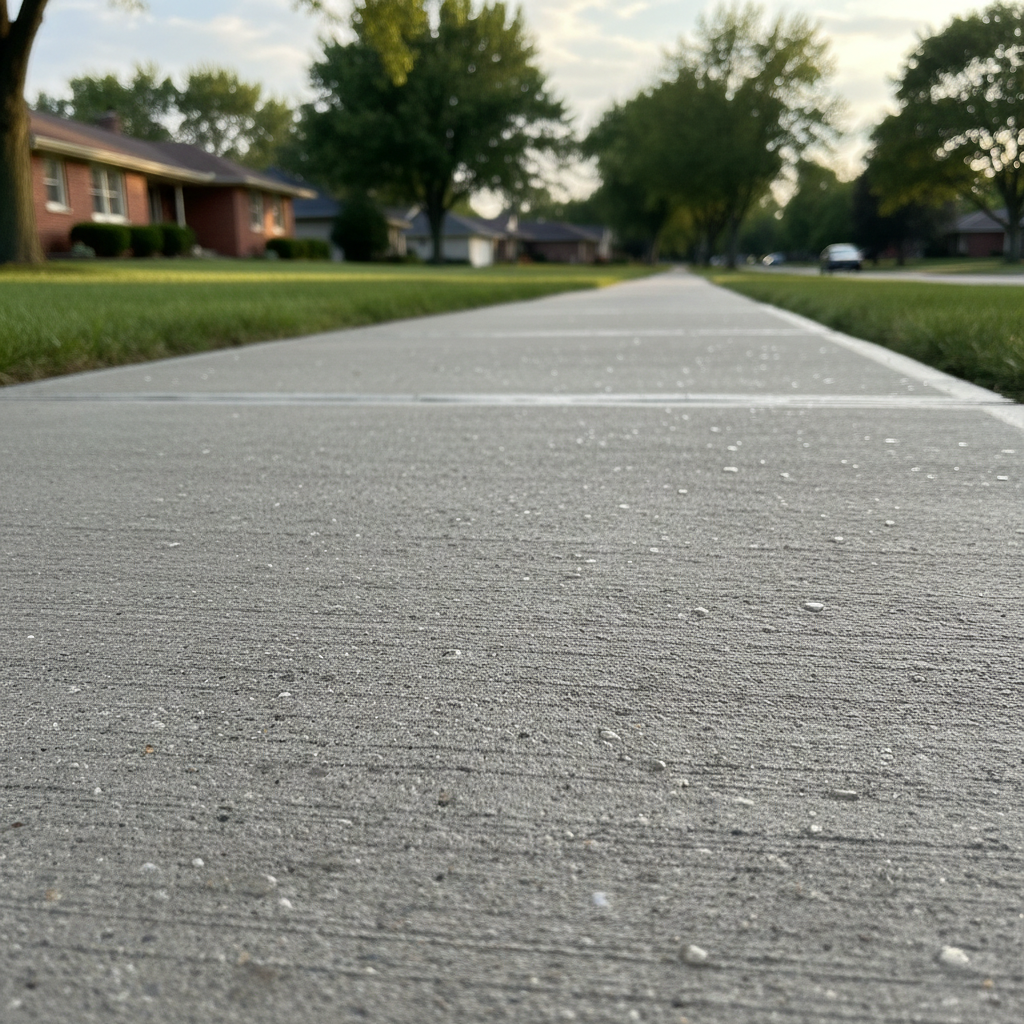
Your concrete sidewalk takes a beating, doesn't it? Between our harsh Illinois winters and the constant foot traffic, it's no wonder folks around Arlington Heights have a lot of questions about keeping their walkways safe and looking good. I get asked these things all the time, so let's just lay it all out there.
Do I really need to fix that small crack in my sidewalk?
Yeah, you probably do. I know, it looks minor now, but those small cracks are like tiny invitations for water. When water seeps in and then freezes, it expands. That expansion turns a small crack into a bigger one, and before you know it, you've got a trip hazard or a whole slab that's heaved up. We see it all the time, especially with the clay-heavy soils we have around here in Arlington Heights. That soil holds onto moisture, which makes the freeze-thaw cycle even more destructive. Address it early with a good quality sealant, or if it's past that, a proper repair. It'll save you a much bigger headache and expense down the road.
How long does a new concrete sidewalk usually last?
A well-installed concrete sidewalk, done right with good materials and proper curing, should easily last 20 to 30 years, sometimes even more. But a few things can shorten that lifespan. Poor drainage, heavy vehicle traffic (even just occasionally driving over it can do damage), and skimping on proper sub-base preparation are big culprits. The quality of the concrete mix itself matters a ton too. You want a contractor who isn't cutting corners on the mix or the prep work. That's where you get your money's worth.
What's the deal with those expansion joints? Are they really necessary?
Absolutely, they're necessary. Think of concrete like a living thing; it expands and contracts with temperature changes. Without expansion joints, that movement has nowhere to go, and the concrete will crack randomly to relieve the stress. Those joints are typically filled with a compressible material, like asphalt-impregnated fiberboard, that allows the concrete slabs to move without pushing against each other. We also use control joints, which are cuts made into the concrete to create weakened planes. This encourages any cracking that does occur to happen in straight, neat lines within the joint, rather than all over the place. It's all about managing the natural behavior of concrete to keep it looking good and lasting longer.
Can I just pour new concrete over my old, cracked sidewalk?
Short answer: No, not usually. This is a common question, and it's almost always a bad idea. If your old sidewalk is cracked, spalling, or uneven, pouring a thin layer of new concrete over it (what we call an overlay) is just putting a band-aid on a broken bone. The problems with the old concrete — the shifting, the cracking, the poor base — will almost certainly transfer right through to your new overlay. You'll end up with a new, thin layer that cracks and breaks apart quickly, and then you've wasted money. The only time an overlay *might* work is if the existing concrete is structurally sound and just needs a cosmetic refresh, but even then, it's a very specific process. For most situations, a full tear-out and replacement is the only way to get a durable, long-lasting result.
How much does a new concrete sidewalk cost in Arlington Heights?
That's like asking how much a car costs, right? It depends on a lot of factors. The biggest ones are the size of the sidewalk (square footage), the thickness of the concrete (standard is usually 4 inches, but sometimes thicker for driveways or heavy use), and the amount of prep work needed. If we have to remove old concrete, that adds to the cost. If the ground needs a lot of grading or a special sub-base, that's also a factor. Then there's the finish you choose – a basic broom finish is standard, but decorative finishes like stamped concrete will cost more. Generally, you're looking at a per-square-foot price, but it's always best to get a detailed, written estimate after someone like us from Oasis Concrete has come out to look at your specific project. Don't just go with the cheapest bid; make sure you're comparing apples to apples on the scope of work and materials.
What's the best way to maintain my concrete sidewalk?
Maintenance isn't super intensive, but a little effort goes a long way. First, keep it clean. Sweep off leaves, dirt, and debris regularly. Don't let puddles sit for long periods, especially in winter. Second, seal it every few years. A good quality concrete sealer repels water, protects against stains, and helps prevent surface spalling from de-icing salts. Third, be careful with de-icing products. Avoid rock salt (sodium chloride) if you can; it's really harsh on concrete. Calcium chloride or magnesium chloride are better options, or even plain sand for traction. And finally, fill those small cracks as soon as you see them. It goes back to what I said earlier: stop the water from getting in. That's the biggest enemy of concrete.
How soon can I walk on new concrete?
For light foot traffic, you can usually walk on new concrete within 24 to 48 hours, sometimes even sooner if it's hot and dry. But here's the kicker: concrete takes a full 28 days to reach its maximum strength. So while it might feel hard after a couple of days, it's still curing and gaining strength. You definitely want to keep heavy items or vehicles off it for at least a week, and ideally longer. We'll always give you specific instructions for your project, but patience really is a virtue when it comes to new concrete. You don't want to mess up all that hard work by rushing it.
Hopefully, that clears up some of your concrete sidewalk questions. If you've got more, or you're ready to talk about a project, just give us a call at Oasis Concrete. We're here to help.