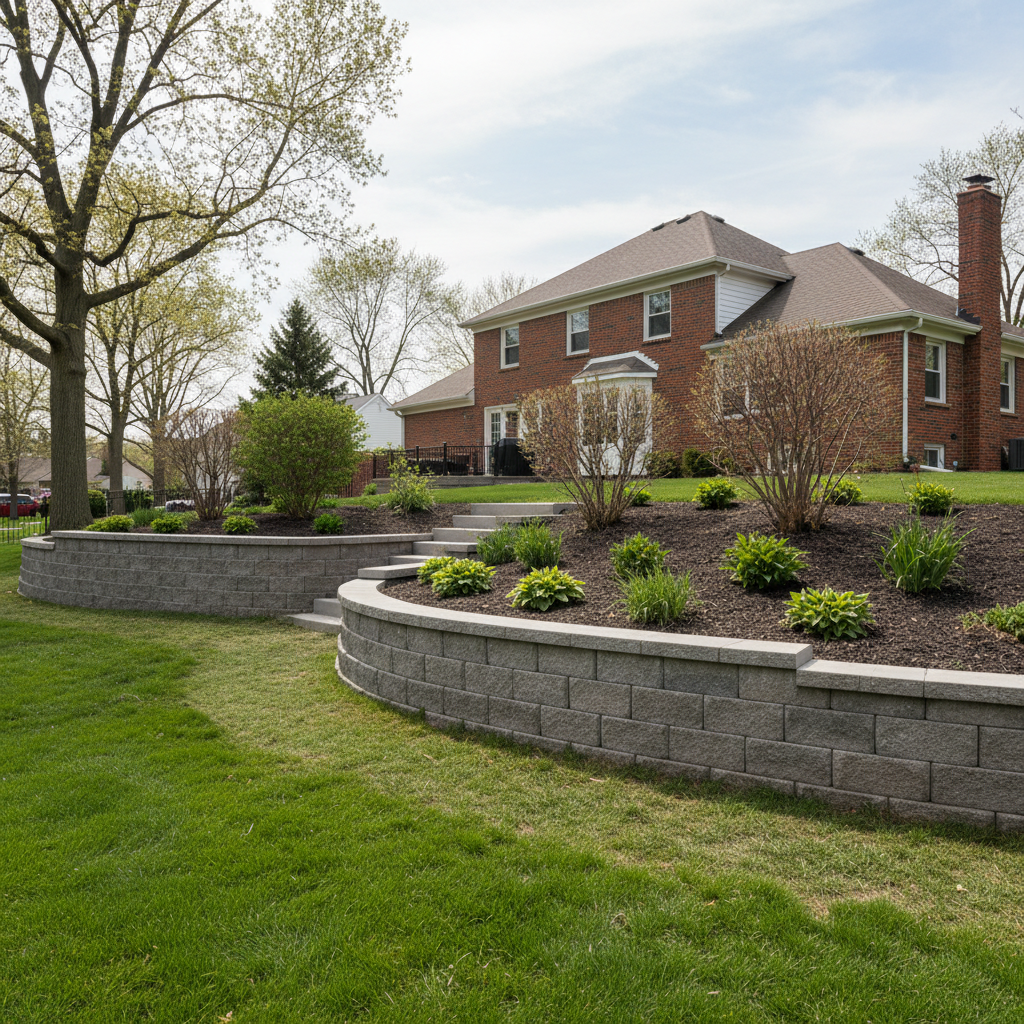
You're thinking about a retaining wall. Maybe your yard slopes, or you want to create some usable, level space. Good idea! A well-built concrete retaining wall can be a real asset to your property, adding curb appeal and function. But I've seen too many folks in Arlington Heights go down the wrong path, ending up with a wall that fails, looks bad, or costs a fortune to fix. Let's talk about the biggest mistakes I see homeowners make, so you don't repeat them.
Mistake #1: Skipping the Permit & Engineering
This is probably the biggest one, and it's a huge red flag if a contractor tells you it's not necessary. In Arlington Heights, any retaining wall over a certain height – usually 4 feet, but check with the village's building department for specifics – absolutely requires a permit. And with that permit comes the need for engineered drawings. Why? Because a retaining wall isn't just a stack of blocks. It's holding back tons of soil, water, and pressure. Without proper engineering, you're asking for trouble. I'm talking about walls that lean, crack, bulge, or even collapse. It's not just a headache; it's a safety hazard. A good contractor will insist on this and guide you through the process. If they don't, run the other way.
Mistake #2: Not Addressing Drainage Properly
Water is the enemy of any retaining wall. Our heavy clay soils here in Arlington Heights, especially after a big spring thaw or a summer downpour, can get saturated. If that water can't escape from behind the wall, it builds up hydrostatic pressure. That pressure is what pushes walls over. I've seen walls that looked great for a year or two suddenly fail because the drainage wasn't designed right. You need a proper drainage system, usually involving a perforated pipe (a 'French drain') behind the wall, covered with gravel, and a filter fabric to keep the soil out. This pipe needs an outlet so the water can flow away from the wall's base. Don't let anyone tell you it's optional. It's critical for the wall's longevity.
Mistake #3: Choosing the Wrong Material or Poor Quality Concrete
While this post is about concrete retaining walls, I've seen homeowners try to cut corners with cheaper materials that just aren't up to the job. For a concrete wall, you need the right mix. It's not just about pouring some cement. You need concrete with the right strength (psi), appropriate for our freeze-thaw cycles here in Chicagoland. Using a low-quality mix or one not designed for exterior, load-bearing applications is a recipe for cracking, spalling, and early deterioration. Also, don't skimp on the rebar. Rebar provides tensile strength, helping the concrete resist bending and cracking. A solid concrete retaining wall needs a robust foundation and proper rebar placement throughout. At Oasis Concrete, we always specify the right mix and reinforcement for the job.
Mistake #4: Ignoring the Foundation
This goes hand-in-hand with engineering, but it's worth its own point. A retaining wall needs a deep, stable foundation that extends below the frost line. In Arlington Heights, that's typically around 42 inches deep. If the foundation isn't deep enough, our winter freezes and thaws will cause the ground to heave, lifting and shifting the wall. This leads to uneven settlement, cracks, and structural failure. The foundation also needs to be wide enough to properly distribute the load. It's not just about digging a shallow trench and pouring concrete. It's about creating a stable base that can withstand the weight of the wall and the soil it's holding back, for decades.
Mistake #5: Hiring the Cheapest Bid Without Due Diligence
I get it, everyone wants a good deal. But when it comes to something as critical as a retaining wall, the cheapest bid is often the most expensive in the long run. I've seen countless homeowners regret going with the lowest price because the contractor cut corners on permits, engineering, drainage, foundation, or concrete quality. Ask for references, check their insurance, and look at their past work. Make sure they understand the specific challenges of building in our area, like the soil conditions or the frost line. A good contractor will be transparent about the process, the materials, and the costs involved. They won't try to rush you or pressure you into a quick decision. They'll also provide a clear, detailed contract outlining everything. If something feels off, trust your gut. It's your home, your money, and your peace of mind on the line.
Building a concrete retaining wall is a significant investment, and you want it done right the first time. Avoid these common pitfalls, and you'll end up with a beautiful, functional, and long-lasting addition to your Arlington Heights property.