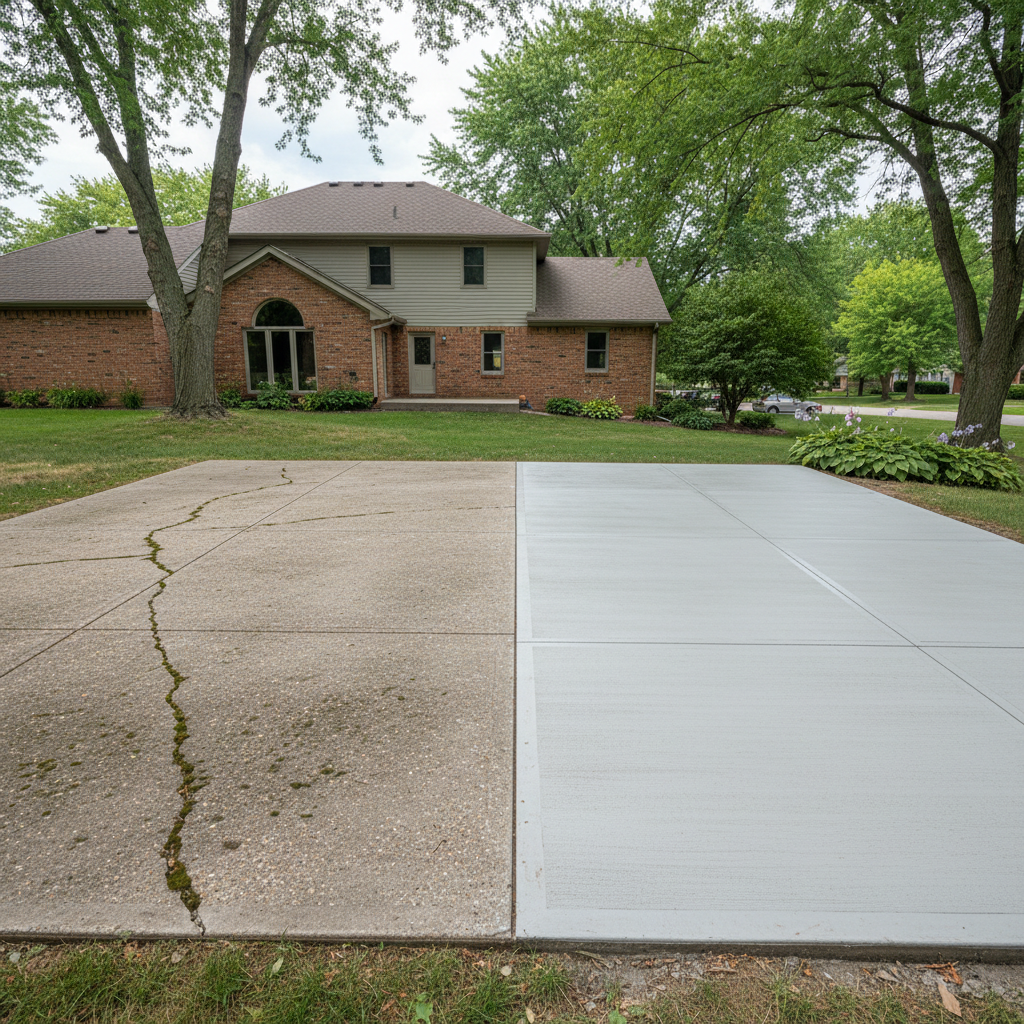
Old Concrete Got You Down?
Nobody wants cracked, spalled, or just plain ugly concrete, do they? Whether it's your driveway, patio, or even just your walkways, bad concrete really drags down the whole look of your home. When you're staring at those eyesores, you usually have two main options: rip everything out and pour brand new concrete, or try to spruce it up with a concrete overlay. Here at Oasis Concrete, your local concrete guys, we see both approaches all the time. I want to give you the straight scoop on what each one involves.
The Full Replacement: New Concrete from Scratch
This is the classic, no-compromise way to go. We come in, break up all the old concrete, haul it away, and then get the sub-base ready for a fresh pour. It's a big job, sure, but it leaves you with a truly new surface.
- Cost: This is almost always the more expensive choice upfront. You're paying for demolition, disposal, new materials, and the labor for the whole shebang. It's a real investment.
- Durability: Unbeatable. When we do it right — with proper sub-base prep, reinforcement, and a quality concrete mix — a new slab will easily last for decades. This is super important in places like Arlington Heights, where our freeze-thaw cycles can be brutal on concrete that's not up to snuff. You're getting a fresh start, engineered specifically to handle our weather.
- Maintenance: Very low. A new slab, properly sealed, really just needs an occasional cleaning. You won't be patching things up or worrying about existing problems.
- Appearance: You get exactly what you want. From a standard broom finish to exposed aggregate or even stamped patterns, you have complete design freedom. It's a blank canvas.
- When it's the best choice: If your existing concrete is severely cracked, heaved, spalled down to the aggregate, or has major drainage issues, new concrete is usually the only real solution. If the foundation underneath is compromised, an overlay won't fix that, plain and simple.
Concrete Overlays: A Facelift for Your Slab
An overlay isn't new concrete; it's a thin layer (usually about 1/4 inch to 1 inch thick) of polymer-modified cementitious material applied right over your existing concrete. Think of it like a heavy-duty skin for your slab.
- Cost: Generally less expensive than a full replacement. You're saving on demolition and disposal, which can really eat into the budget.
- Durability: This is where things get a bit tricky. An overlay's durability is directly tied to the condition of the concrete underneath. If the existing slab has structural cracks or is actively moving, guess what? The overlay will eventually crack too. It's only as good as its base, after all. It can hold up well for years if the underlying concrete is stable, but it's not a permanent structural fix.
- Maintenance: Similar to new concrete, but you might need to be a little more vigilant about addressing any new cracks that pop up, especially if they reflect through from the old slab.
- Appearance: Very versatile! Overlays can be colored, stained, stamped, or textured to mimic stone, brick, or even tile. You can get some truly beautiful, custom looks. It's a great way to update an old, dull surface without a full tear-out.
- When it's the best choice: If your concrete is mostly sound but just looks bad – maybe minor surface imperfections, discoloration, or light spalling – an overlay can be a fantastic, cost-effective way to refresh its appearance. It's also great if you want a decorative finish without the full cost of stamped new concrete. For example, if your backyard patio in the Scarsdale neighborhood is just a boring gray slab but otherwise solid, an overlay could transform it into a beautiful outdoor living space.
My Recommendation for Arlington Heights Homeowners
Given our climate, with those harsh winters and hot, humid summers, my general recommendation for most exterior applications is a full concrete replacement. Why? Because the freeze-thaw cycles are brutal, and they exploit any weakness. An overlay, while great for aesthetics, doesn't address underlying structural issues or poor sub-base conditions that are often the root cause of concrete failure here.
If your concrete is severely cracked, heaved, or has significant drainage problems, please don't waste your money on an overlay. It's just a band-aid solution that won't last. Invest in new concrete, done right from the ground up. You'll thank yourself in 10 or 20 years, believe me.
However, if your concrete is structurally sound – maybe it's just discolored, has very minor surface imperfections, and you're looking for a cost-effective way to boost curb appeal or get a decorative finish, then an overlay can be a good option. Just make sure you're working with a contractor who thoroughly assesses your existing slab first. We'll always give you an honest assessment of what we think will work best for your home and your budget.
Ready to Talk Concrete?
No matter which path you're leaning towards, the first step is always getting a professional evaluation. We can look at your specific situation, discuss your goals, and give you a clear estimate for both options. Don't guess; let's figure out the best way to get your concrete looking great and lasting long.